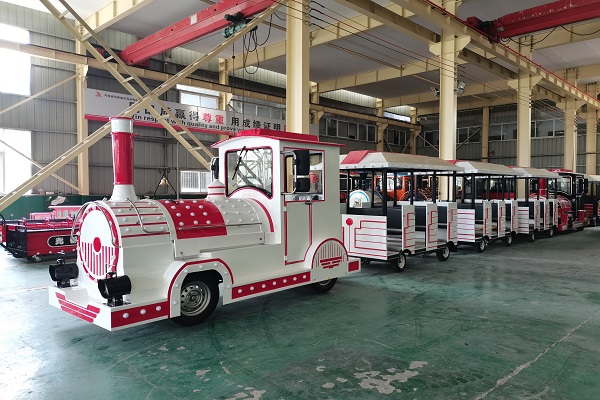
販売されている大型ディーゼル無軌道列車は一種の 無軌道電車に乗る. 通常, 射程が長く威力も強いのが特徴. ディニス工場で, すべてのディーゼル無軌道列車は、長寿命の高品質FRP素材を採用しています。. ディーゼルエンジンを搭載しているため、, 大きな遊園地への良い交通手段です, 遊園地, 等. カーニバルのビジネス用にディーゼル無軌道列車を購入したい場合, Dinis アミューズメント乗り物メーカーにお気軽にお問い合わせください.
競合他社ではなく Dinis 遊園地乗り物メーカーを選ぶ理由?
3 Best-Selling Large Diesel Trackless Tourist Trains: 40, 56 そして 70 座席
熱い販売 58 ディニス工場の座席無軌道気動車
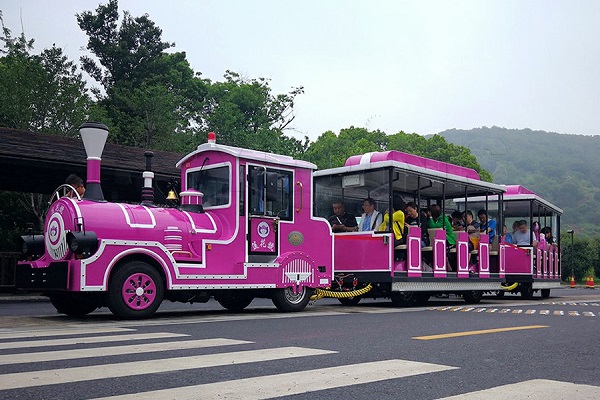
例えば, キャビンの外観, 半密閉のキャビンがあります, 閉まっている, そしてオープンキャビン, 等. それ以上, 無軌道列車の全体サイズは大きい. そんな気動車を購入したいなら, 敷地面積を総合的に考慮する必要があります. 機関車のサイズについて, 4150*2200*2400mmです. しかし, キャビンのサイズは 5600*1900*2500 mm. 若干の調整可能です. さらに詳しく知りたい場合は, メールでお気軽にお問い合わせください.
その他の構成情報
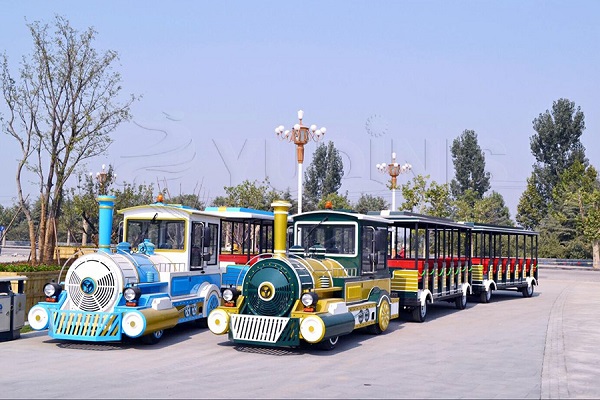
The 40-seat vintage trackless tourist train combines a classic appearance with practical passenger transportation performance. With a maximum operating speed of 25 km/h and a minimum turning radius of 15 メーター, it is suitable for relatively flat routes in amusement parks, ホリデーリゾート, scenic attractions and large recreational areas. The train is designed for routes with gradients of up to 5%, making it a practical solution for sightseeing tours and short-distance passenger transport.
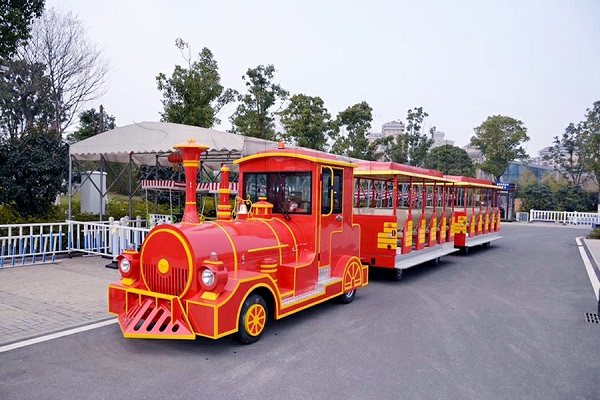
The 70-seat large trackless tourist train provides a high-capacity sightseeing and passenger transportation solution for large parks and tourism projects. The train consists of one locomotive and four passenger carriages, accommodating up to 70 passengers per trip. With an operating speed of up to 25 km/h, a turning radius greater than 18 meters and an emergency braking distance of no more than 0.5 メーター, it is suitable for large scenic areas, テーマパーク, リゾート, zoos and other attractions with high visitor volumes.


Trackless Tourist Train Technical Specifications
Compare passenger capacity, dimensions, operating requirements and diesel engine configuration for our large trackless tourist trains.
| 仕様 |
40-Seat Vintage Trackless Tourist Train |
70-Seat Large Trackless Tourist Train |
Cummins Diesel 構成 |
|---|---|---|---|
| 乗車定員 | 40 乗客 | 70 乗客 | Not specified |
| Train Configuration | Not specified | Locomotive + 4 客車 | Not specified |
| エンジン | Not specified | Not specified | Cummins diesel engine |
| Engine Power | Not specified | Not specified | 130 HP / 96 kW |
| 定格電力 | Not specified | Not specified | 96 kW / 3600 rpm |
| Maximum Gradient | ≤ 5% | ≤ 5% | Not specified |
| Maximum Operating Speed | ≤ 25 km/h | 25 km/h | Not specified |
| 最小回転半径 | ≥ 15 m | > 18 m | Not specified |
| Emergency / 最大制動距離 | Not specified | ≤ 0.5 m | 最大制動距離: 4 m |
| Fuel Capacity | Not specified | Not specified | 70 L |
| Empty Vehicle Mass | Not specified | Not specified | 5,200 kg Excluding passengers |
| Overall Dimensions | 15 × 1.9 × 2.6 m | 17 × 1.9 × 2.6 m | Not specified |

Where Can You Operate a Large Diesel Trackless Tourist Train?
A trackless tourist train ride is a flexible transportation and sightseeing solution for locations that need to move visitors efficiently while also improving the overall guest experience. Because the train does not require fixed rails, routes can usually be planned around existing roads, internal pathways and attraction zones, making it especially suitable for amusement parks, リゾート, 景勝地, zoos and other tourist destinations.
The best operating location depends on visitor volume, 路線の長さ, 道路幅, slope conditions, turning radius and the type of experience you want to create. Below are some of the most suitable applications for a large diesel or electric trackless tourist train.

Which Type of Tourist Train Is Best for Your Project?
Diesel-powered trains are often selected for outdoor attractions that require long operating ranges and strong power, while electric trains are particularly suitable for locations that prioritize quiet operation and lower local emissions.
Before choosing a model, it is advisable to evaluate the site layout, expected passenger volume, route conditions and daily operating schedule. This allows the tourist train capacity and configuration to be matched to the actual needs of the project.
Diesel vs Electric Trackless Tourist Train: Which One Fits Your Project?
Both diesel and electric trackless tourist trains can be used in amusement parks, リゾート, scenic areas and other attractions, but the right choice depends on your route, operating schedule, passenger capacity and site infrastructure. Rather than choosing only by power type, operators should compare daily operating hours, charging or refueling conditions, noise requirements, route gradients and long-term operating costs.
Diesel vs Electric Trackless Tourist Train
Compare diesel and electric trackless tourist trains by operating flexibility, energy supply, noise, メンテナンス, terrain requirements and typical applications.
| 要素 | Diesel 無軌道電車 | 電気 無軌道電車 |
|---|---|---|
| Daily Operating Flexibility | Suitable for long shifts with quick refueling | Depends on battery capacity and charging schedule |
| Energy Replenishment | Fast refueling | Requires charging time |
| Noise | Generally higher | Generally lower |
| Tailpipe Emissions | Produces exhaust during operation | No tailpipe emissions during operation |
| Charging Infrastructure | Not required | Reliable charging access required |
| Maintenance Focus | エンジン, filters, cooling and fuel system | バッテリー, charger, controller and motor |
| Terrain Capability | Must be verified by the specifications of the selected model | Must be verified by the specifications of the selected model |
| Typical Applications | Large outdoor parks, scenic areas and remote tourist attractions | モール, quiet resorts, zoos and environmentally sensitive areas |
| Peak-Hour Continuity | Strong operating flexibility when rapid refueling is available | Requires sufficient battery capacity or train rotation |
| Operating Cost | Influenced by diesel price and engine maintenance | Influenced by electricity price and battery lifecycle |
Daily operating requirements are one of the first factors to consider when choosing a tourist train.
A diesel trackless tourist train is often a practical choice for large outdoor attractions where the train needs to operate for long periods throughout the day. Once fuel is available on site, the train can normally return to service shortly after refueling. This can be useful during weekends, holidays and peak tourist seasons when continuous passenger transportation is important.
例えば, a large scenic area may operate a tourist train continuously between the entrance, major viewpoints, restaurants and visitor centers. In this type of project, long operating hours and limited downtime may make a diesel configuration attractive.
Electric tourist trains can also provide reliable daily service, but their operating duration depends on factors such as:
バッテリー容量
乗車定員
路線の長さ
Number of stops and starts
道路勾配
周囲温度
Use of lighting, air conditioning or other auxiliary systems
Available charging time
For attractions with predictable operating schedules and sufficient charging periods, an electric train can be an effective solution. Some operators may also use multiple electric trains in rotation so that one unit can charge while another remains in operation.
したがって, operating range should not be evaluated from the power source alone. The actual route and daily schedule should be considered together.
Energy replenishment is another major operational difference between diesel and electric tourist trains.
A diesel tourist train can generally be refueled relatively quickly. This makes it suitable for attractions where short service interruptions are important, especially when the train is responsible for moving large numbers of visitors throughout the day.
Typical applications may include:
大型遊園地
High-traffic scenic attractions
Remote outdoor tourist destinations
Resorts with long internal shuttle routes
Attractions with limited charging infrastructure
Electric trains require access to suitable charging facilities. Charging time depends on the battery system and charger configuration, so the charging schedule should be planned before operation begins.
For a resort that mainly operates the train during daytime hours and can charge it overnight, this may not create any operational difficulty. In contrast, a scenic attraction requiring intensive morning-to-evening transportation may need a larger battery configuration, faster charging equipment or additional trains.
When comparing diesel and electric models, buyers should therefore ask:
How many hours must the train operate each day, and how much downtime can the project accept?
This question is often more useful than simply comparing fuel and battery specifications.
Electric trackless tourist trains generally produce less operating noise and have no tailpipe emissions while running.
These characteristics can make electric models particularly attractive for:
Quiet resort environments
動物園
Botanical gardens
Pedestrian-oriented tourism areas
Indoor or semi-enclosed commercial venues
Environmentally sensitive destinations
Lower operating noise may also improve the sightseeing experience in locations where visitors expect a peaceful environment.
Diesel trains, by comparison, produce engine noise and exhaust during operation. このため, they are generally more appropriate for open outdoor environments where ventilation is not a concern and where operational endurance or quick refueling is a higher priority.
しかし, the choice should still depend on the actual project.
例えば, a large outdoor theme park may prioritize high passenger throughput and long operating hours, while a luxury resort may place greater importance on quiet operation around guest accommodation.
The goal is not to determine which power system is universally better, but which one matches the experience and operating requirements of the destination.
Power and climbing performance are often misunderstood when comparing diesel and electric tourist trains.
Diesel engines are commonly used for large-capacity outdoor tourist trains, but this does not mean every diesel train is automatically suitable for steep roads.
Actual gradeability depends on the complete vehicle configuration, 含む:
Engine or motor output
Transmission system
Vehicle weight
Full passenger load
Tire traction
Braking system
Road surface
Gradient length
Weather conditions
例えば, our 40-seat vintage trackless tourist train and 70-seat large tourist train are designed for routes with a maximum recommended gradient of ≤5%.
The 40-seat model requires a minimum turning radius of approximately 15 メーター, while the 70-seat model, consisting of a locomotive and four passenger carriages, requires a turning radius greater than 18 メーター.
These specifications are more useful for route planning than general statements such as “diesel is better for hills.”
Before selecting a train, project owners should provide information about road width, 最大勾配, turning areas, route length and surface conditions. This allows the manufacturer to recommend a configuration that matches the actual operating environment.
Purchase price is only one part of the total cost of owning a tourist train.
Electric trains generally have fewer engine-related maintenance requirements because they do not use a conventional diesel engine, fuel system or engine oil. しかし, operators still need to maintain components such as:
- Batteries
- Chargers
- Electric motors
- Controllers
- Braking systems
- Tires
- Electrical connections
Battery condition and eventual battery replacement should also be considered when estimating long-term ownership costs.
Diesel tourist trains require routine maintenance of systems such as:
- Engine oil and filters
- Fuel system
- Cooling system
- Transmission components
- Brakes
- Tires
Fuel consumption also contributes to daily operating costs.
しかし, diesel models offer the operational advantage of fast refueling and do not require dedicated charging infrastructure.
このため, 購入者は比較する必要があります total operating cost, not just initial equipment price.
A useful project calculation is:
Diesel operating cost = fuel consumption per hour × operating hours × local diesel price
For electric models:
Electric operating cost = daily electricity consumption × local electricity rate
Maintenance costs, battery lifecycle, local labor rates and downtime should then be included in the overall comparison.
The right power system depends on your specific project.
A diesel trackless tourist train may be a better fit when your attraction has:
Long outdoor operating routes
High daily passenger volume
Long operating hours
Limited charging infrastructure
Short allowable downtime
Remote operating locations
A need for rapid energy replenishment
An electric trackless tourist train may be more suitable when your project prioritizes:
Quiet operation
No local tailpipe emissions
Predictable daily routes
Reliable charging access
Overnight charging
Operation near hotels, animals or environmentally sensitive areas
For projects involving slopes, high passenger capacity or unusual road conditions, the decision should not be made based on diesel versus electric alone. Always compare the specifications of the actual train model under the expected operating conditions.
For large outdoor attractions that require continuous passenger transportation, our 40-seat and 70-seat diesel trackless tourist trains provide practical high-capacity options. Both are designed for routes with a maximum recommended gradient of ≤5%, while their different passenger capacities and turning-radius requirements allow project owners to select the model that better matches their visitor flow and site layout. If quiet operation and zero local exhaust emissions are more important for your project, an electric configuration may be more appropriate. By providing your project location, 乗客容量, 路線の長さ, road gradient, daily operating hours and application scenario, we can help you compare the available options and select a suitable trackless tourist train for your attraction.
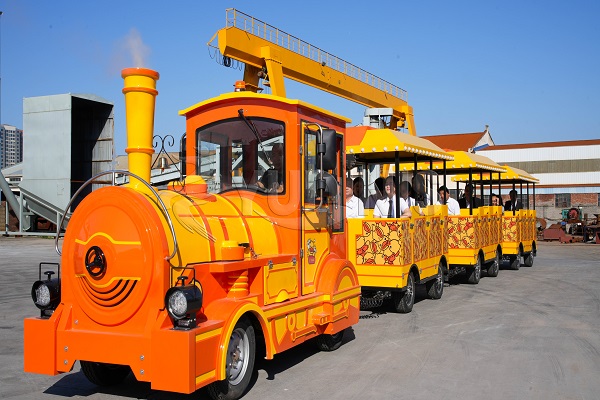

大型ディーゼル無軌道列車を購入するにはいくらかかりますか?
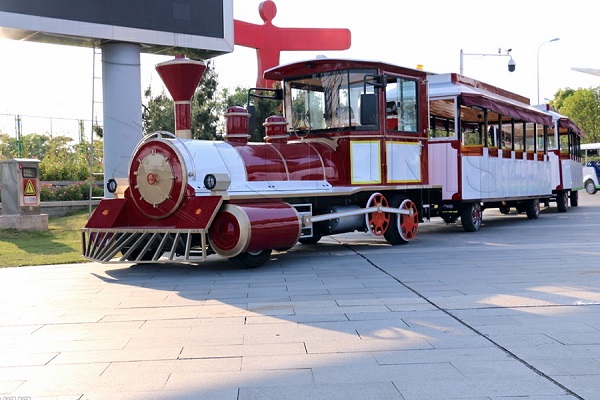
販売中のディーゼル無軌道電車の素材はどうですか??
電車の素材としては, 私たちはすべて上質な素材を採用しています. 機関車用, 高品質のFRP素材を使用しています. そして、それは高温耐性の特性を持っています, 耐食性, 長寿命, 滑らかな表面, メンテナンスと手入れが簡単, 軽量, 簡単な取り付け. コンポーネント板金プレス加工. 絵を描くために, 車専用のペイントとプロのベーキングプロセスを使用しています. 塗装が剥がれにくく耐久性に優れています. 大型ディーゼル無軌道電車についてもっと詳しく知りたい方は, お気軽にお問い合わせください.