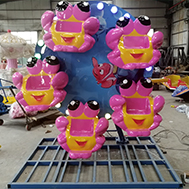
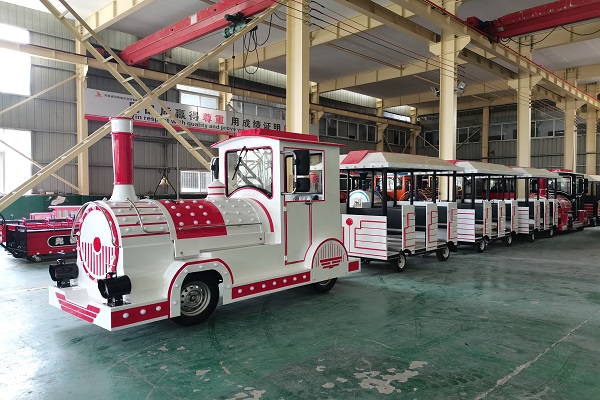
판매되는 대형 디젤 무궤도 열차는 일종의 인적 없는 기차 타기. 일반적으로, 사거리가 길고 위력이 강한 것이 특징이다. 디니스 공장에서, 모든 디젤 무궤도 열차는 수명이 긴 고품질 FRP 소재를 채택합니다.. 디젤 엔진을 사용하기 때문에, 큰 유원지를 위한 좋은 교통 수단입니다, 유원지, 등. 카니발 사업을 위해 디젤 무궤도 열차를 구매하려는 경우, 디니스 어뮤즈먼트 라이드 제조사에 편하게 문의해주세요.
경쟁사 대신 Dinis 놀이기구 제조업체를 선택해야 하는 이유?
3 Best-Selling Large Diesel Trackless Tourist Trains: 40, 56 그리고 70 좌석
핫 세일 58 Dinis 공장의 무궤도 디젤 열차 좌석
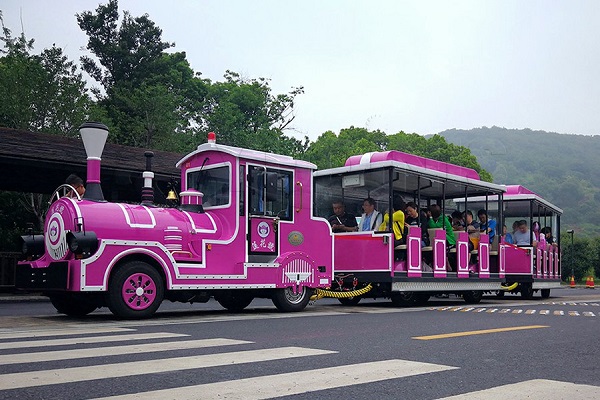
예를 들어, 캐빈의 모습, 반폐쇄형 캐빈이 있습니다, 닫은, 그리고 오픈 캐빈, 등. 더 이상, 무궤도 열차의 전체 크기가 크다. 이런 디젤 열차를 사고 싶다면, 사이트 영역을 종합적으로 고려해야 합니다.. 기관차 크기, 4150*2200*2400mm 입니다. 하지만, 객실 크기는 5600*1900*2500 mm. 살짝 조절 가능해요. 더 자세한 내용을 알고 싶으시다면, 이메일로 저희에게 연락하십시오.
기타 구성 정보
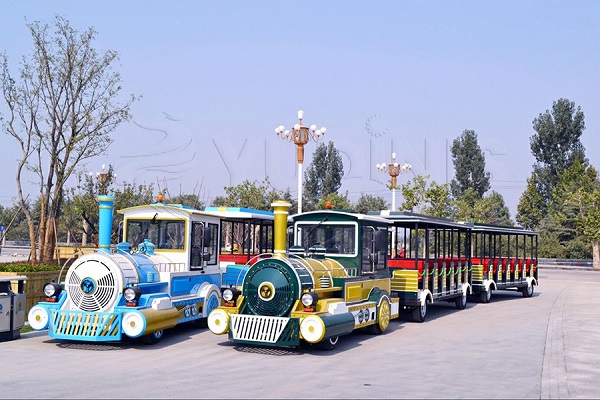
The 40-seat vintage trackless tourist train combines a classic appearance with practical passenger transportation performance. With a maximum operating speed of 25 km/h and a minimum turning radius of 15 미터, it is suitable for relatively flat routes in amusement parks, 휴양지, scenic attractions and large recreational areas. The train is designed for routes with gradients of up to 5%, making it a practical solution for sightseeing tours and short-distance passenger transport.
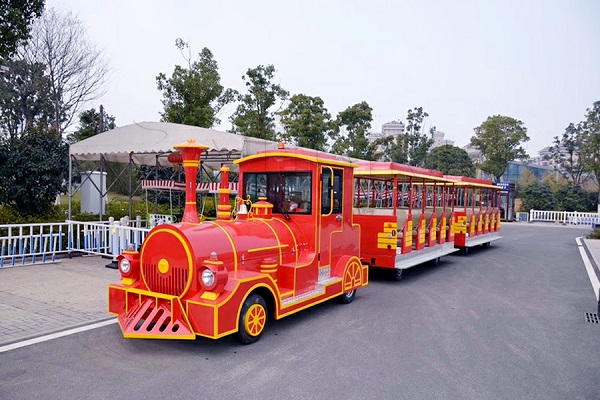
The 70-seat large trackless tourist train provides a high-capacity sightseeing and passenger transportation solution for large parks and tourism projects. The train consists of one locomotive and four passenger carriages, accommodating up to 70 passengers per trip. With an operating speed of up to 25 km/h, a turning radius greater than 18 meters and an emergency braking distance of no more than 0.5 미터, it is suitable for large scenic areas, 테마파크, 리조트, zoos and other attractions with high visitor volumes.


Trackless Tourist Train Technical Specifications
Compare passenger capacity, dimensions, operating requirements and diesel engine configuration for our large trackless tourist trains.
| 사양 |
40-Seat Vintage Trackless Tourist Train |
70-Seat Large Trackless Tourist Train |
Cummins Diesel 구성 |
|---|---|---|---|
| 승객 수용력 | 40 승객 | 70 승객 | Not specified |
| Train Configuration | Not specified | Locomotive + 4 여객차 | Not specified |
| 엔진 | Not specified | Not specified | Cummins diesel engine |
| Engine Power | Not specified | Not specified | 130 HP / 96 kW |
| 정격 출력 | Not specified | Not specified | 96 kW / 3600 rpm |
| Maximum Gradient | ≤ 5% | ≤ 5% | Not specified |
| Maximum Operating Speed | ≤ 25 km/h | 25 km/h | Not specified |
| 최소 회전 반경 | ≥ 15 중 | > 18 중 | Not specified |
| Emergency / 최대 제동 거리 | Not specified | ≤ 0.5 중 | 최대 제동 거리: 4 중 |
| Fuel Capacity | Not specified | Not specified | 70 엘 |
| Empty Vehicle Mass | Not specified | Not specified | 5,200 kg Excluding passengers |
| Overall Dimensions | 15 × 1.9 × 2.6 중 | 17 × 1.9 × 2.6 중 | Not specified |

Where Can You Operate a Large Diesel Trackless Tourist Train?
A trackless tourist train ride is a flexible transportation and sightseeing solution for locations that need to move visitors efficiently while also improving the overall guest experience. Because the train does not require fixed rails, routes can usually be planned around existing roads, internal pathways and attraction zones, making it especially suitable for amusement parks, 리조트, 명승지, zoos and other tourist destinations.
The best operating location depends on visitor volume, 경로 길이, 도로 폭, slope conditions, turning radius and the type of experience you want to create. Below are some of the most suitable applications for a large diesel or electric trackless tourist train.

Which Type of Tourist Train Is Best for Your Project?
Diesel-powered trains are often selected for outdoor attractions that require long operating ranges and strong power, while electric trains are particularly suitable for locations that prioritize quiet operation and lower local emissions.
Before choosing a model, it is advisable to evaluate the site layout, expected passenger volume, route conditions and daily operating schedule. This allows the tourist train capacity and configuration to be matched to the actual needs of the project.
Diesel vs Electric Trackless Tourist Train: Which One Fits Your Project?
Both diesel and electric trackless tourist trains can be used in amusement parks, 리조트, scenic areas and other attractions, but the right choice depends on your route, operating schedule, passenger capacity and site infrastructure. Rather than choosing only by power type, operators should compare daily operating hours, charging or refueling conditions, noise requirements, route gradients and long-term operating costs.
Diesel vs Electric Trackless Tourist Train
Compare diesel and electric trackless tourist trains by operating flexibility, energy supply, noise, 유지, terrain requirements and typical applications.
| 요인 | Diesel 인적 없는 열차 | 전기 같은 인적 없는 열차 |
|---|---|---|
| Daily Operating Flexibility | Suitable for long shifts with quick refueling | Depends on battery capacity and charging schedule |
| Energy Replenishment | Fast refueling | Requires charging time |
| Noise | Generally higher | Generally lower |
| Tailpipe Emissions | Produces exhaust during operation | No tailpipe emissions during operation |
| Charging Infrastructure | Not required | Reliable charging access required |
| Maintenance Focus | 엔진, filters, cooling and fuel system | 배터리, charger, controller and motor |
| Terrain Capability | Must be verified by the specifications of the selected model | Must be verified by the specifications of the selected model |
| Typical Applications | Large outdoor parks, scenic areas and remote tourist attractions | 쇼핑몰, quiet resorts, zoos and environmentally sensitive areas |
| Peak-Hour Continuity | Strong operating flexibility when rapid refueling is available | Requires sufficient battery capacity or train rotation |
| Operating Cost | Influenced by diesel price and engine maintenance | Influenced by electricity price and battery lifecycle |
Daily operating requirements are one of the first factors to consider when choosing a tourist train.
A diesel trackless tourist train is often a practical choice for large outdoor attractions where the train needs to operate for long periods throughout the day. Once fuel is available on site, the train can normally return to service shortly after refueling. This can be useful during weekends, holidays and peak tourist seasons when continuous passenger transportation is important.
예를 들어, a large scenic area may operate a tourist train continuously between the entrance, major viewpoints, restaurants and visitor centers. In this type of project, long operating hours and limited downtime may make a diesel configuration attractive.
Electric tourist trains can also provide reliable daily service, but their operating duration depends on factors such as:
배터리 용량
승객 하중
경로 길이
Number of stops and starts
도로 경사
주변 온도
Use of lighting, air conditioning or other auxiliary systems
Available charging time
For attractions with predictable operating schedules and sufficient charging periods, an electric train can be an effective solution. Some operators may also use multiple electric trains in rotation so that one unit can charge while another remains in operation.
그러므로, operating range should not be evaluated from the power source alone. The actual route and daily schedule should be considered together.
Energy replenishment is another major operational difference between diesel and electric tourist trains.
A diesel tourist train can generally be refueled relatively quickly. This makes it suitable for attractions where short service interruptions are important, especially when the train is responsible for moving large numbers of visitors throughout the day.
Typical applications may include:
큰 오락 공원
High-traffic scenic attractions
Remote outdoor tourist destinations
Resorts with long internal shuttle routes
Attractions with limited charging infrastructure
Electric trains require access to suitable charging facilities. Charging time depends on the battery system and charger configuration, so the charging schedule should be planned before operation begins.
For a resort that mainly operates the train during daytime hours and can charge it overnight, this may not create any operational difficulty. In contrast, a scenic attraction requiring intensive morning-to-evening transportation may need a larger battery configuration, faster charging equipment or additional trains.
When comparing diesel and electric models, buyers should therefore ask:
How many hours must the train operate each day, and how much downtime can the project accept?
This question is often more useful than simply comparing fuel and battery specifications.
Electric trackless tourist trains generally produce less operating noise and have no tailpipe emissions while running.
These characteristics can make electric models particularly attractive for:
Quiet resort environments
동물원
Botanical gardens
Pedestrian-oriented tourism areas
Indoor or semi-enclosed commercial venues
Environmentally sensitive destinations
Lower operating noise may also improve the sightseeing experience in locations where visitors expect a peaceful environment.
Diesel trains, by comparison, produce engine noise and exhaust during operation. 이러한 이유로, they are generally more appropriate for open outdoor environments where ventilation is not a concern and where operational endurance or quick refueling is a higher priority.
하지만, the choice should still depend on the actual project.
예를 들어, a large outdoor theme park may prioritize high passenger throughput and long operating hours, while a luxury resort may place greater importance on quiet operation around guest accommodation.
The goal is not to determine which power system is universally better, but which one matches the experience and operating requirements of the destination.
Power and climbing performance are often misunderstood when comparing diesel and electric tourist trains.
Diesel engines are commonly used for large-capacity outdoor tourist trains, but this does not mean every diesel train is automatically suitable for steep roads.
Actual gradeability depends on the complete vehicle configuration, 포함:
Engine or motor output
Transmission system
Vehicle weight
Full passenger load
Tire traction
Braking system
Road surface
Gradient length
Weather conditions
예를 들어, our 40-seat vintage trackless tourist train and 70-seat large tourist train are designed for routes with a maximum recommended gradient of ≤5%.
The 40-seat model requires a minimum turning radius of approximately 15 미터, while the 70-seat model, consisting of a locomotive and four passenger carriages, requires a turning radius greater than 18 미터.
These specifications are more useful for route planning than general statements such as “diesel is better for hills.”
Before selecting a train, project owners should provide information about road width, 최대 경사도, turning areas, route length and surface conditions. This allows the manufacturer to recommend a configuration that matches the actual operating environment.
Purchase price is only one part of the total cost of owning a tourist train.
Electric trains generally have fewer engine-related maintenance requirements because they do not use a conventional diesel engine, fuel system or engine oil. 하지만, operators still need to maintain components such as:
- Batteries
- Chargers
- Electric motors
- Controllers
- Braking systems
- Tires
- Electrical connections
Battery condition and eventual battery replacement should also be considered when estimating long-term ownership costs.
Diesel tourist trains require routine maintenance of systems such as:
- Engine oil and filters
- Fuel system
- Cooling system
- Transmission components
- Brakes
- Tires
Fuel consumption also contributes to daily operating costs.
하지만, diesel models offer the operational advantage of fast refueling and do not require dedicated charging infrastructure.
이러한 이유로, 구매자는 비교해야합니다 total operating cost, not just initial equipment price.
A useful project calculation is:
Diesel operating cost = fuel consumption per hour × operating hours × local diesel price
For electric models:
Electric operating cost = daily electricity consumption × local electricity rate
Maintenance costs, battery lifecycle, local labor rates and downtime should then be included in the overall comparison.
The right power system depends on your specific project.
A diesel trackless tourist train may be a better fit when your attraction has:
Long outdoor operating routes
High daily passenger volume
Long operating hours
Limited charging infrastructure
Short allowable downtime
Remote operating locations
A need for rapid energy replenishment
An electric trackless tourist train may be more suitable when your project prioritizes:
Quiet operation
No local tailpipe emissions
Predictable daily routes
Reliable charging access
Overnight charging
Operation near hotels, animals or environmentally sensitive areas
For projects involving slopes, high passenger capacity or unusual road conditions, the decision should not be made based on diesel versus electric alone. Always compare the specifications of the actual train model under the expected operating conditions.
For large outdoor attractions that require continuous passenger transportation, our 40-seat and 70-seat diesel trackless tourist trains provide practical high-capacity options. Both are designed for routes with a maximum recommended gradient of ≤5%, while their different passenger capacities and turning-radius requirements allow project owners to select the model that better matches their visitor flow and site layout. If quiet operation and zero local exhaust emissions are more important for your project, an electric configuration may be more appropriate. By providing your project location, 승객 수용 능력, 경로 길이, road gradient, daily operating hours and application scenario, we can help you compare the available options and select a suitable trackless tourist train for your attraction.
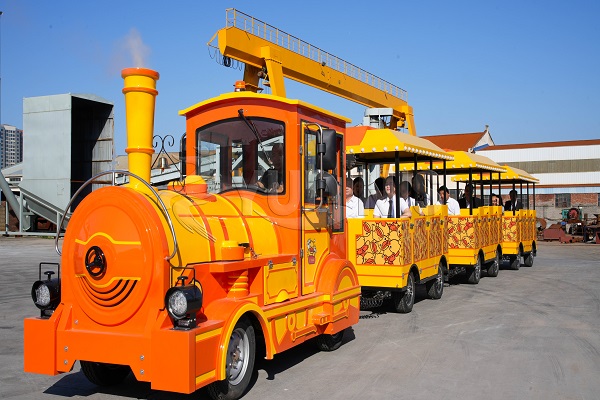

대형 디젤 무궤도 열차를 구입하는 데 드는 비용은 얼마입니까??
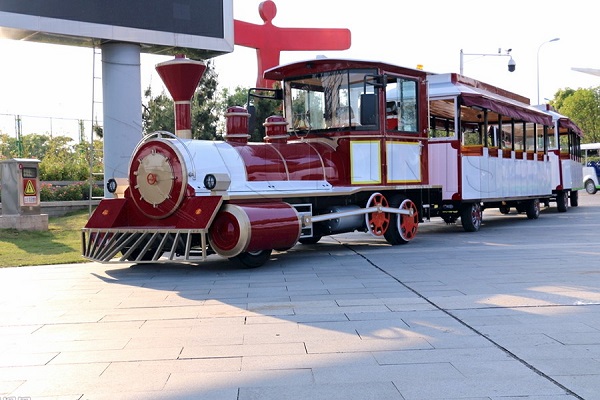
판매중인 디젤무궤도열차의 재질은 어떻습니까??
기차의 재료에 대해, 우리 모두는 좋은 소재를 채택. 기관차의 경우, 우리는 좋은 품질의 FRP 소재를 사용합니다. 그리고 그것은 고온 저항의 특성을 가지고 있습니다, 부식 저항, 장수, 매끄러운 표면, 쉬운 유지 보수 및 관리, 가벼운 무게, 쉬운 설치. 부품 판금 스탬핑. 그림을 위해, 자동차 전용 페인트와 전문적인 베이킹 공정을 사용합니다.. 페인트가 쉽게 벗겨지지 않으며 내구성이 뛰어납니다.. 대형 디젤 무궤도열차에 대한 자세한 정보를 알고 싶다면, 저희에게 연락하십시오.